
Pilates helps improve Diastasis Recti
A recent study discovered that Pilates was an effective method at reducing inter-recti distance, waist circumference, and muscular endurance in postpartum women (Lee et al, 2023).
There are significant physical changes during pregnancy, including:
development of mammary glandular tissue
breast enlargement
enlargement of uterus 5-6 times it’s normal size
diaphragm pushed up into abdominal cavity reducing thoracic space
centre of gravity changes that overly arches the lower back (lordosis)
sacroiliac joint and pubic symphysis ligaments relaxing
(Lee et al, 2023)
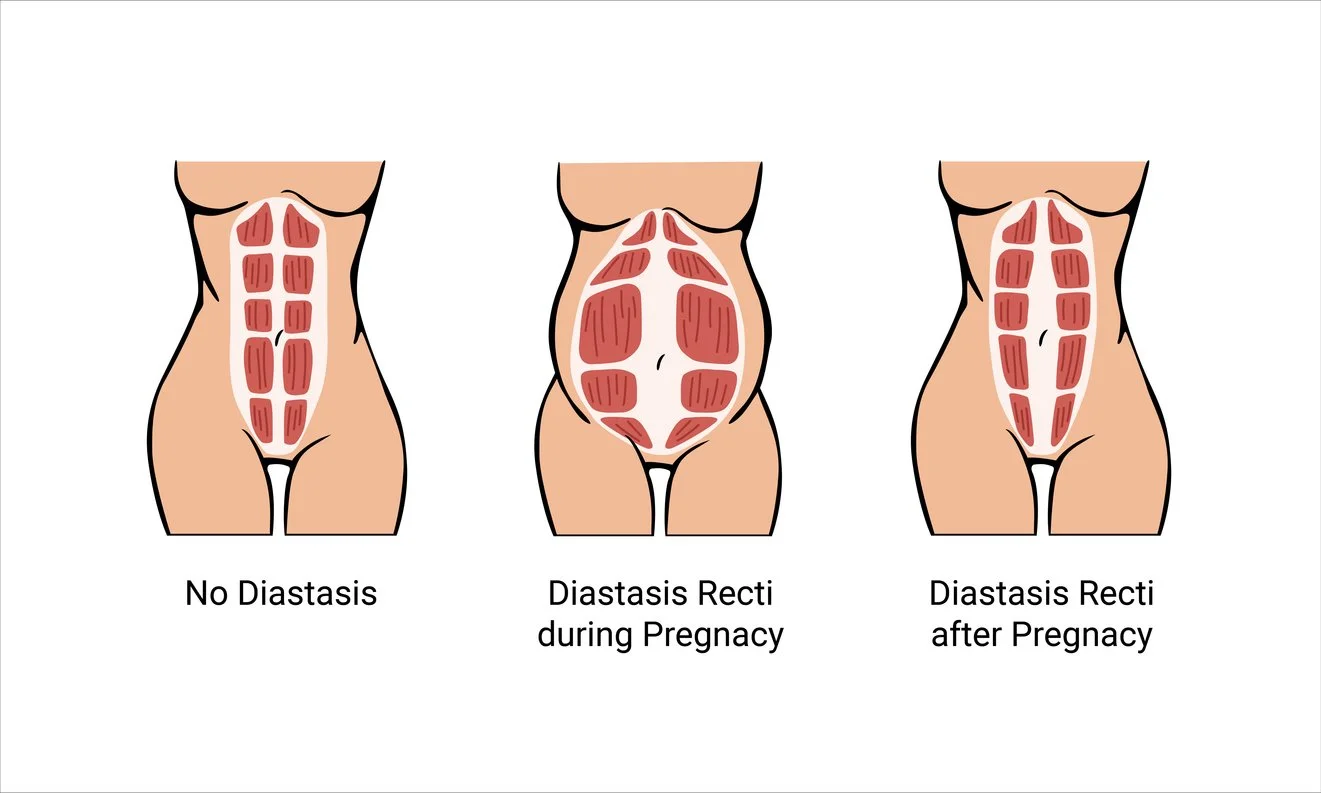
Additionally, the hormone relaxin changes connective tissue elasticity leading to mechanical stress of the linea alba. The linea alba is the connective tissue in the middle of our most superficial abdominal muscle called the rectus abdominus (our six-pack muscle). The linea alba naturally begins to stretch from about the 14th week of pregnancy, increasing the most during the third trimester (Lee et al, 2023).

iStock image
The increase in this space, often called the inter-recti distance, is perfectly normal; however, it does lower the stability of the pelvis by weakening the abdominal muscles and reducing their control (Lee et al, 2023). Often this instability leads to dysfunction, pain, and incorrect posture (Lee et al, 2023).
Diastasis recti (DR) occurs when the inter-recti distance is more than 2cm at one or more areas along the linea alba. DR can be above the navel, at the navel, or below the navel.
iStock image
Numerous studies have found specific abdominal exercises to be effective for the recovery of elasticity in the abdominal walls and pelvis, as well as, addressing weight management and alleviation of anxiety and depression in postnatal women (Lee et al, 2023). They also discovered certain breathing exercises to activate the deep layers of core to also be important (Lee et al, 2023).
A recent study from 2023 focused on Pilates exercises and whether they too could have a positive effect on DR. DR naturally recovers within 8 weeks postpartum in most cases, so the study made sure to select women 2-12 months postpartum with significant issues with DR. They used ultrasound imaging to measure DR and the thickness of the abdominal muscles. They also measured waist circumference and abdominal endurance.
For this particular study, twenty postnatal women were in the exercise group and fifteen postnatal women were in the control group. The control group maintained daily life activities without intervention, whereas the exercise group performed Pilates exercises for 50 minutes five days a week for a total of 4 weeks. Three of those workouts were performed together in a group class, and two workouts were done at home. The exercises at home were the same exercises they did during the group classes. There was a 10 minute warmup, 30 minute workout, and 10 minute cool down.
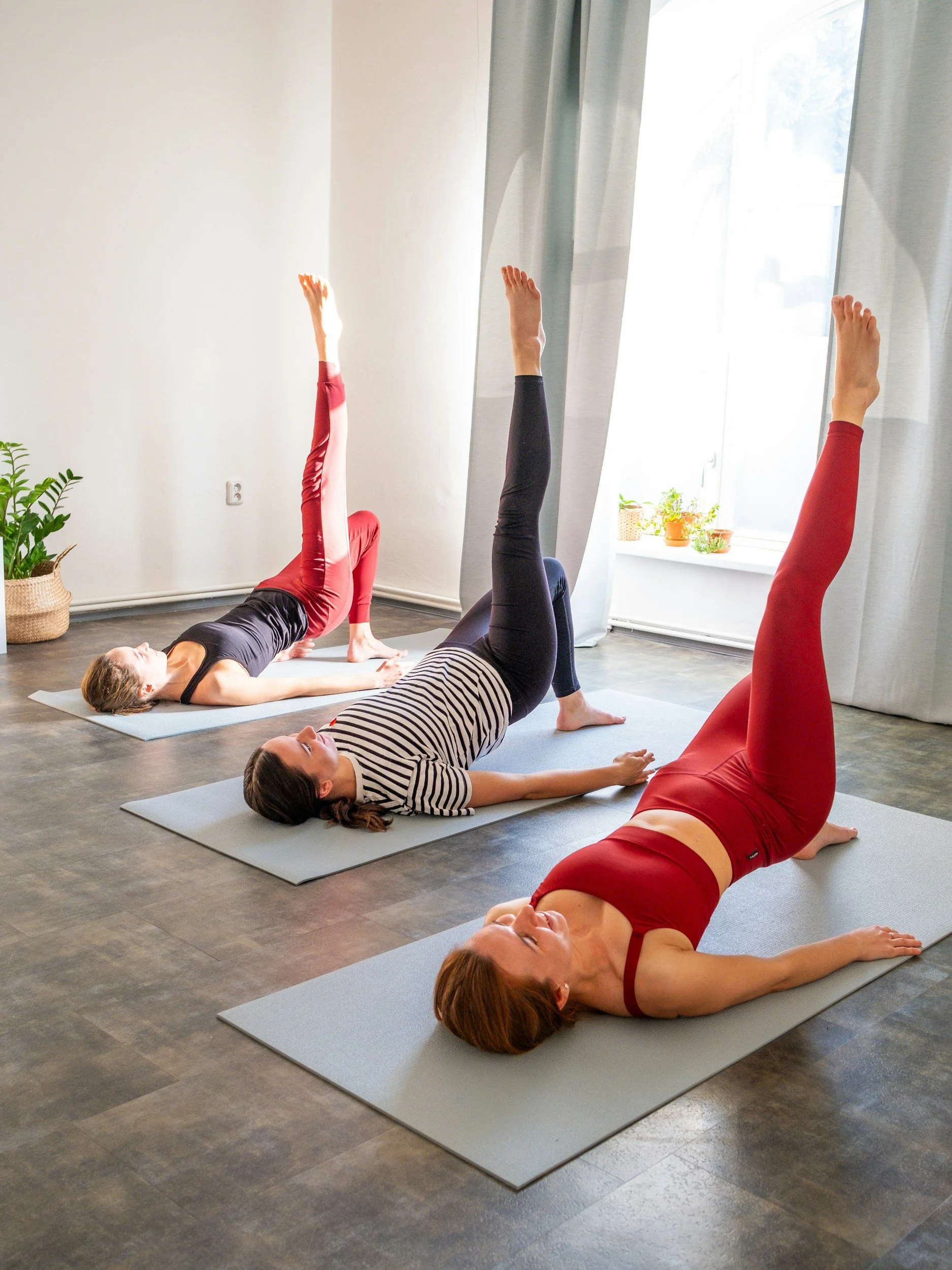
The study designed a Pilates exercise program to stabilize the waist and pelvis, improve muscular endurance, and restore thoracic, abdominal, and pelvic muscles that had become less connected during pregnancy and childbirth (Lee et al, 2023).
Each week they added more challenging exercises (list of each week is below article).
After the 4 weeks it was discovered that there were signifiant improvements to the inter-recti distance, waist circumference, and abdominal endurance within the exercise group compared to the control group. The exercise group’s DR was more narrow, their waist was smaller, and their endurance was greater compared to the control group. One thing that didn’t improve was abdominal thickness, it was not significantly different between the two groups and researchers note previous studies demonstrated exercise programs 6 weeks or longer were needed to build muscle.
I know for me I developed a four-finger-wide DR around my navel that I had many years after childbirth (like for 10 years!), and it was only when I started doing Pilates most days of the week for several years did my separation finally close. Pilates is an excellent option for connecting with all the layers of the core. Additionally, we learn correct breathing techniques to properly regulate intra-abdominal pressure.
I filmed a 28 minute workout showcasing most of the exercises used in the study. I walk through the important elements of each of the exercises.
Here is the list of exercises the exercise group did 5 times a week in the 4 week study:
First week:
Supine Breathing
Pelvic Clock
Marching/Toe Taps
Pushing Knee
Double Leg Bridge
Abdominal Curl Up
Prone breathing
Side Lying Inside Leg Lift
Hands/Knees Breathing
Seated Breathing
Mermaid
Second Week:
Supine Breathing
Pelvic Clock
Marching/Toe Taps
Pushing Knee
Double Leg Bridge
Abdominal Curl Up
Diagonal Curl Up
Hundred
Single Leg Stretch
Prone Breathing
Side Lying Inside Leg Lift
Side Lying Leg Lifts
Hands/Knees Breathing
Seated Breathing
Mermaid
Third Week:
Supine Breathing
Pelvic Clock
Marching/Toe Taps
Pushing Knee
Double Leg Bridge
Abdominal Curl Up
Diagonal Curl Up
Hundred
Single Leg Stretch
Single Leg Bridge
Prone Breathing
Side Lying Inside Leg Lift
Side Lying Leg Lifts
Side Push Up
Hands/Knees Breathing
Hands/Knees Double Knees Lift
Bird Dogs
Seated Breathing
Mermaid
Side Plank Modified
Fourth Week:
Supine Breathing
Pelvic Clock
Marching/Toe Taps
Pushing Knee
Double Leg Bridge
Abdominal Curl Up
Diagonal Curl Up
Hundred
Single Leg Stretch
Single Leg Bridge
Prone Breathing
Side Lying Inside Leg Lift
Side Lying Leg Lifts
Side Push Up
Hands/Knees Breathing
Hands/Knees Double Knees Lift
Bird Dogs
Seated Breathing
Mermaid
Side Plank
Hope you enjoy the pelvic stability and breathing exercises in the workout video, I had fun doing it.
Resources:
Lee, N., Bae, Y. H., Fong, S. S. M., & Lee, W. H. (2023). Effects of Pilates on inter-recti distance, thickness of rectus abdominis, waist circumference and abdominal muscle endurance in primiparous women. BMC women's health, 23(1), 626. https://doi.org/10.1186/s12905-023-02775-5