
Reverse Plank for Correcting Shoulders and Pelvis
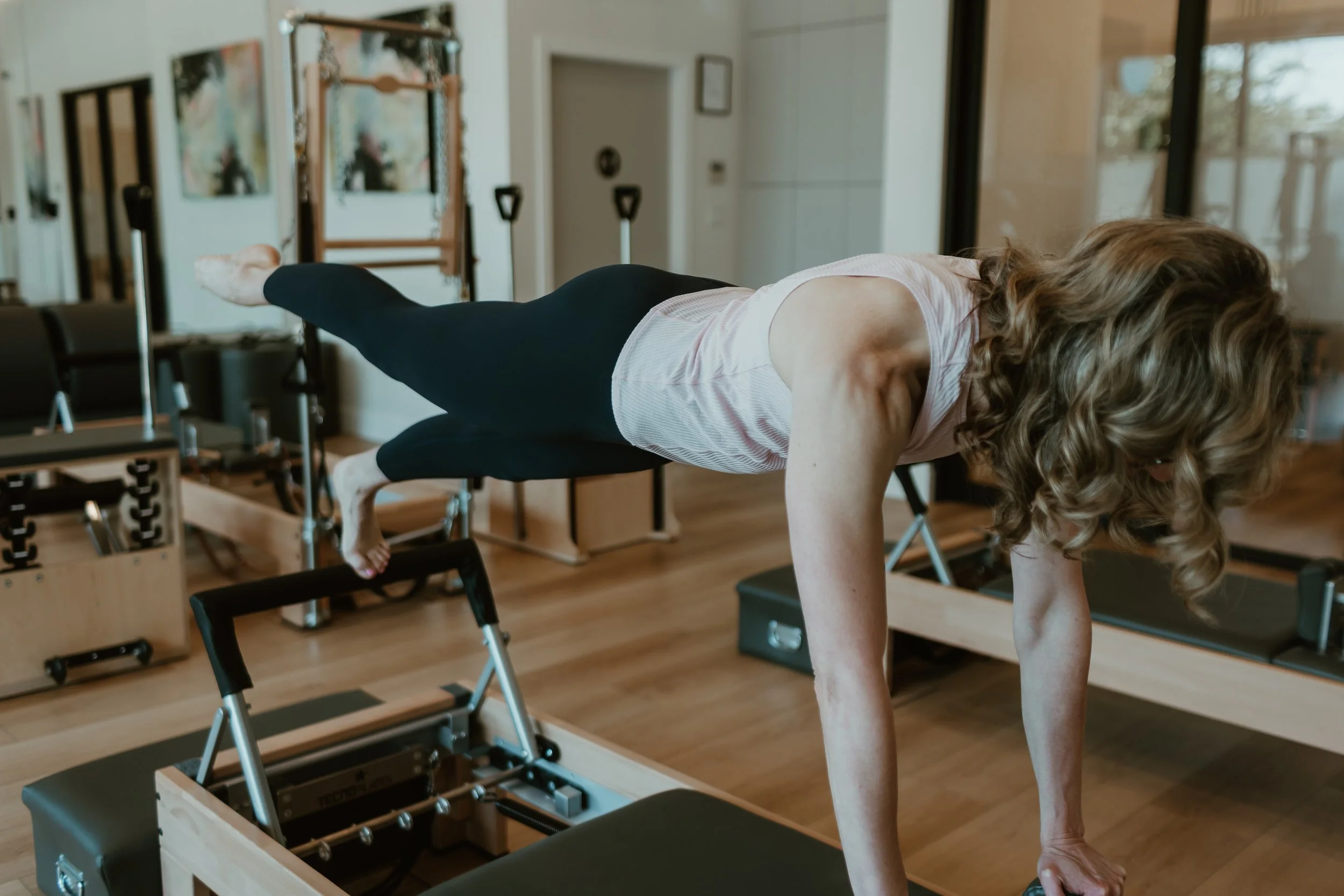
Photo credit: Meg Kristina Photography
We LOVE the forward plank around here at the studio! The amazing benefits of the Plank include: increased core strength, reduced low back pain, total body engagement (especially shoulders, arms, glutes, quads, and hamstrings).
But what about the Reverse Plank? Several studies demonstrate the benefits of the Reverse Plank for correcting shoulder and pelvic placement.
To address the rising issues of “tech neck” and rounded shoulders, the Reverse Plank activates the back muscles and posterior stabilizers while stretching tight chest and front shoulder muscles (Koo, Nam, Kwon 2022).
Forward shoulder posture is characterized by:
>protracted scapula (shoulder blades widening forward)
>anteriorly tipped shoulder girdle (shoulder blades rolling forward)
>cervical lordosis (neck arching forward)
>upper thoracic kyphosis (rounded hunched upper back)
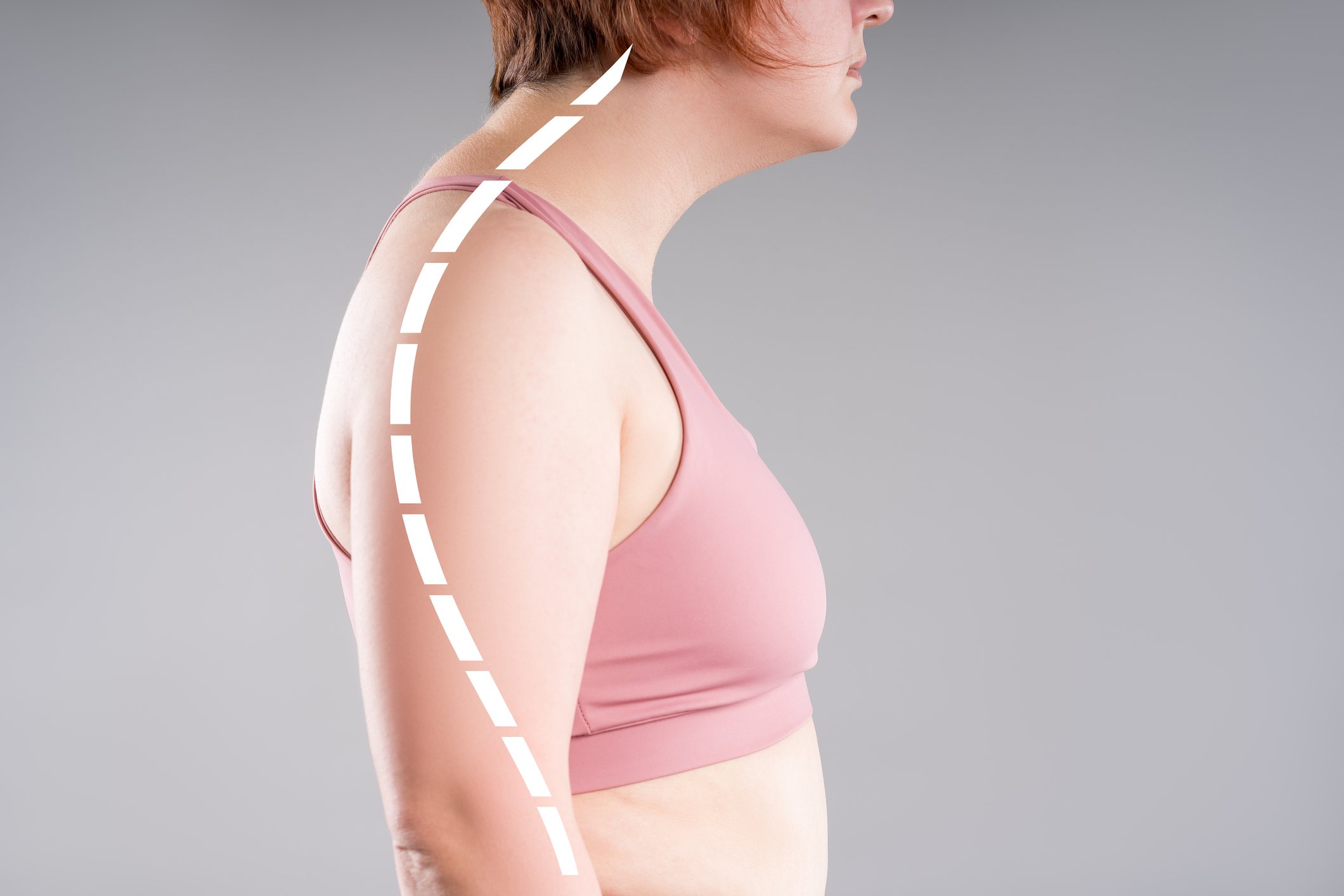
These issues increase muscle tension and stress in the neck and shoulders resulting in pain, numbness, and loss of function (Koo, Nam, Kwon 2022).
The Reverse Plank focuses on the muscles on the back side of the body plus the abdominals when performing the exercise correctly.
We extend the shoulders, retract the shoulder blades, lift hips, slightly posterior tilt the pelvis, while forming a line from head to toe with the heels and hands pushing into the floor.
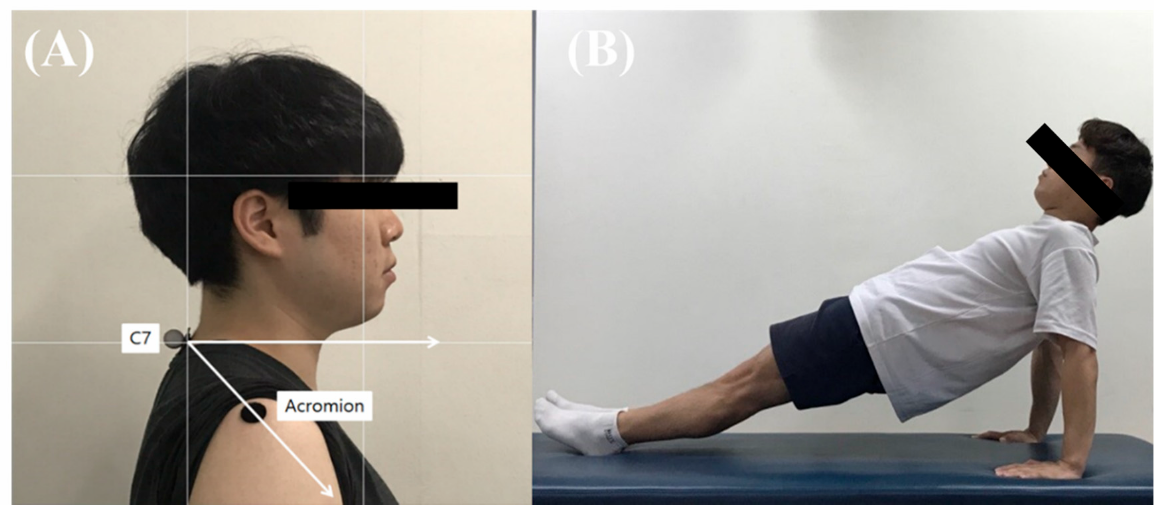
(A) Adhesive marker placement and postural angles
(B) Reverse plank exercise position (Koo, Nam, Kwon, 2022)
One study took forty university students and divided them into two groups depending on the angle of their shoulder girdle, there was a forward shoulder posture group (FSP) and a non-forward shoulder posture group (NFSP). The forward shoulder angle and muscle thickness of pectorals major (chest), serratus anterior (on side ribs and under shoulder blades), upper trapezius (upper shoulder and back of neck), and lower trapezius (on and below shoulder blades - mid back) was measured before and after the exercise set to compare what muscles were used to perform the Reverse Plank. The exercise set consisted of 5 sets of 30 second holds with 30 second breaks in between each set.
For both groups the muscle thickness of the serratus anterior and lower trapezius were significantly increased, whereas the pectorals major and upper trapezius were significantly decreased (Koo, Nam, Kwon, 2022). This indicates that the muscles around the shoulder blades and mid-back were challenged and the chest and upper back neck muscles were stretched. This is great news!For those who have rounded shoulders and overactive upper traps, the Reverse Plank would be a good exercise to regularly practice.

Within Pilates Apparatus repertoire the Shoulder Bridge on the Tower/Cadillac is a similar exercise to the Reverse Plank with less load on the shoulders.
Photo credit: Meg Kristina Photography
Another study explored the muscular strategies for moving the pelvis to improve posture. This study had 41 participants who were moderately active (exercised at least 3 days per week). When moving the pelvis into a posterior tilt, they discovered the participants exhibited four different movement patterns (Ludwig, Dindorf, Kelm, Frohlich, 2024). Some people used their rectus abdominals and obliques more, some used their trapezius and spinal erectors more, some used their hamstrings more, and some used their glutes more.
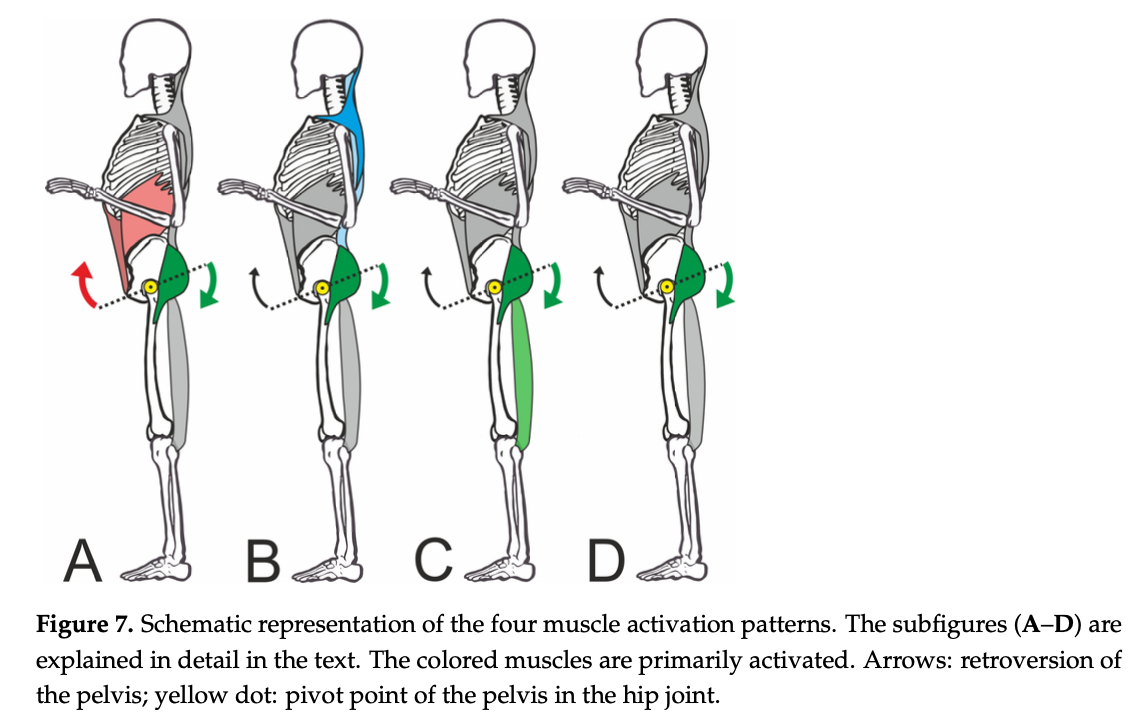
(Ludwig, Dindorf, Kelm, Frohlich, 2024)
In order to learn how to correctly move the pelvis with greater muscular balance, the researchers recommended people be guided by a physiotherapist or kinesiologist specifically for their unique patterns. However, they did discover that with all four movement patterns, the gluteus maximus was a powerful mover of the pelvis, due to the high amount of force this muscle generates (Ludwig, Dindorf, Kelm, Frohlich, 2024). The reseachers proposed an emphasis on training the gluteus maximus to improve proper pelvis positioning (Ludwig, Dindorf, Kelm, Frohlich, 2024). The Reverse Plank is an excellent exercise to strengthen and activate the butt muscles, as well as, to learn to use the abdominals to help posteriorly tilt the pelvis.
The Reverse Plank is a very challenging exercise, especially for those who are new to it. With proper preparation and progressive overload, you will be able to accomplish it!
Start with a Bridge, work toward a Table, and then eventually the Reverse Plank.
I walk through all three in the video below:
I don’t mention hand positioning in the video: fingers can be pointed forward, out to the side, or pointed back. Do what feels best on your shoulder girdle. For me, I love pointing my fingers out of the side.
The first study concluded that the Reverse Plank is a practical and useful exercise to strengthen and stretch muscles concurrently for those with forward shoulder posture, while being easy to implement at home without equipment (Koo, Nam, Kwon 2022). The second study concluded that training the glutes will help build the strength necessary to maintain proper pelvis alignment (Ludwig, Dindorf, Kelm, Frohlich, 2024). The Bridge, Table, and Reverse Plank are great exercises for that.
Resources
Ludwig, O.; Dindorf, C.; Kelm, S.; Kelm, J.; Fröhlich, M. Muscular Strategies for Correcting the Pelvic Position to Improve Posture—An Exploratory Study. J.Funct. Morphol. Kinesiol. 2024, 9, 25. https://doi.org 10
Koo, D.-K.; Nam, S.-M.; Kwon, J.-W. Immediate Effects of the Reverse Plank Exercise on Muscle Thickness and Postural Angle in Individuals with the Forward Shoulder Posture. J. Funct. Morphol. Kinesiol. 2022, 7, 82. https://doi.org/10.3390/jfmk7040082