
All Training Loads Increase Hypertrophy
A brand new study reinforces that resistance training does not have to be super heavy to be effective. Over the years, several important studies on this same topic demonstrate the same thing: if you love to lift heavy weights, then great, you will get results. If you would rather lift lighter weights, awesome, you will get the same results.
I have been in the fitness industry for 27 years and I have seen trends come and go. Many of the trends are not based on scientific evidence, but rather generated on making money because of the hype. In reality, the science hasn’t changed all that much because our bodies are still the same bodies that require the same healthy things: we need movement to improve cardiovascular health, reduce the risk of chronic diseases, diabetes, and certain cancers, as well as, gain strength, mobility, and energy to live our best lives.
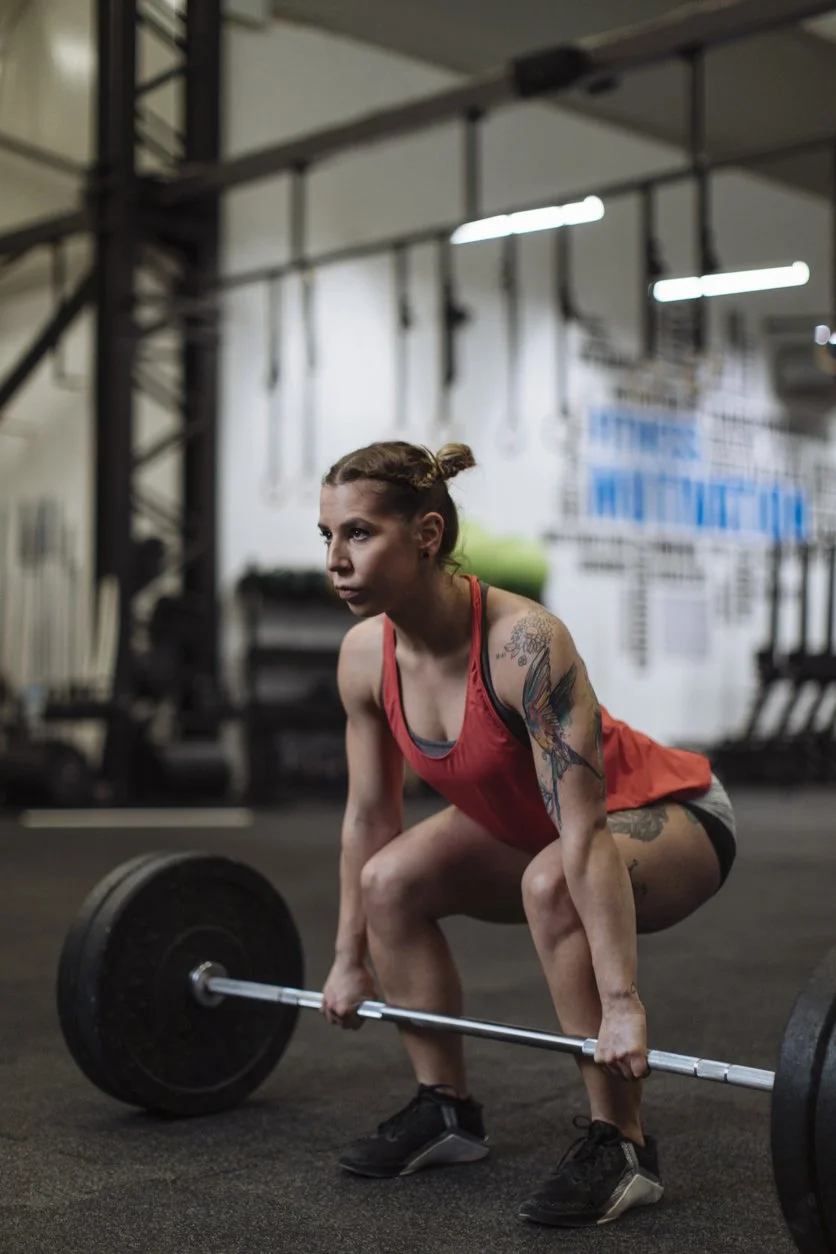
The latest new fad declares that people must lift very heavy for their workouts to be effective. But that is not the only way. It’s a great way if you love to lift heavy things. My youngest daughter is in university for kinesiology and she loves to weight train using the standard barbell lifts: bench press, back squat, deadlift, and back rows.
Istock Photo Credit: mihailomilovanovic
Years ago, I did too. I used to barbell deadlift and back squat my bodyweight (125lbs!).
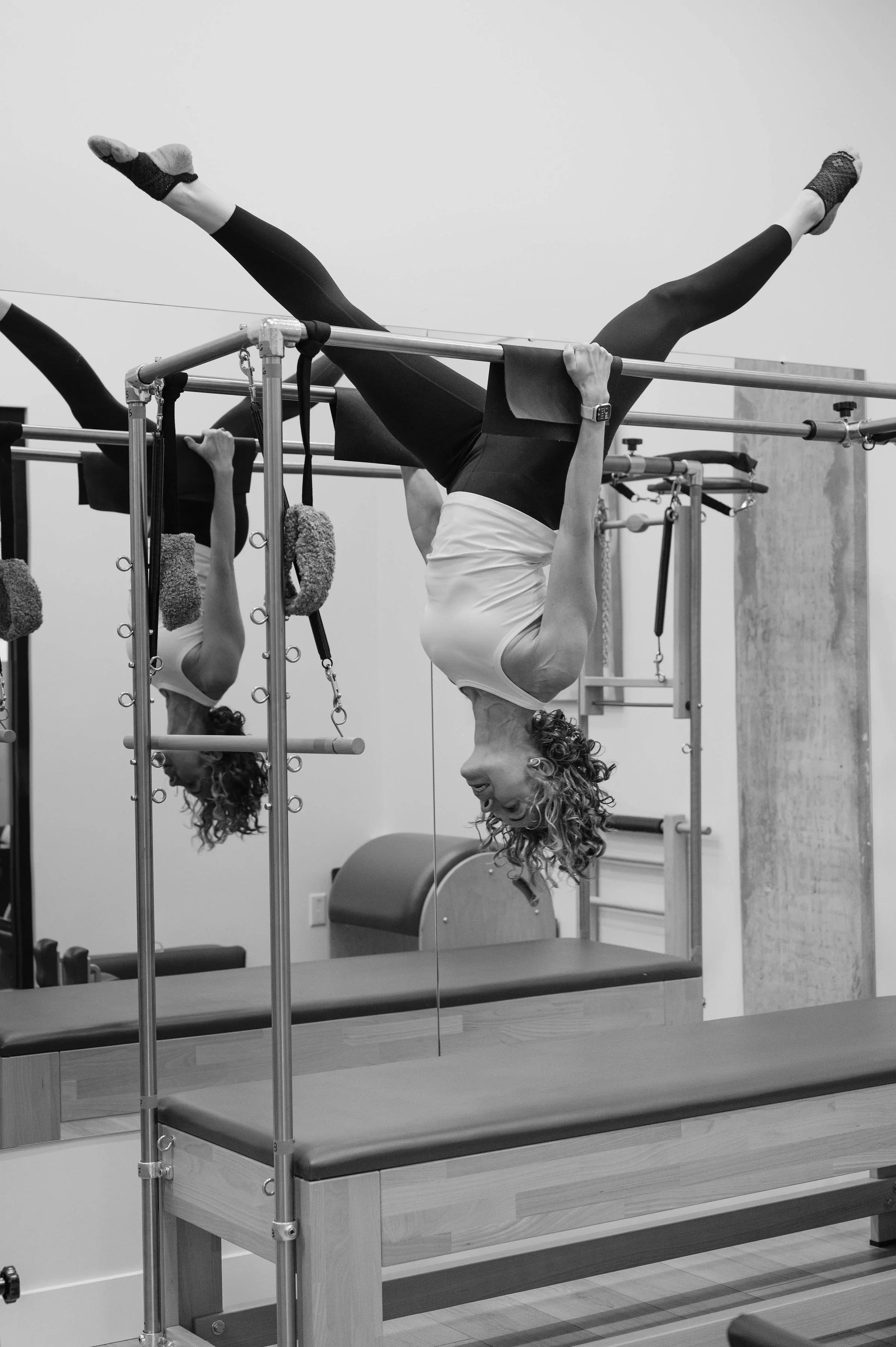
Unfortunately when I lifted heavy my joints hurt all the time and I accumulated a few serious injuries from this method of training. At that time, I switched to barre and Pilates apparatus, and my joint pain stopped, I still gained lean muscle mass, and I have been injury free ever since.
Photo credit: Erin Gigard
Presently, I run three times per week and I train Pilates apparatus with a few added physiotherapy-style exercises the other days of the week, and I love it. My body feels great!
The 2025 study took twenty healthy yet untrained males and randomly assigned their arm and leg to either train higher-load, lower-repetition resistance for 8-12 repetitions at 70-80% of their 1-rep maximum or lower-load, higher-repetition for 20-25 repetitions at 30-40% 1-rep maximum (Lees et al., 2025). 1-rep maximum is the amount of load a person can lift in one rep. The higher-load limb lifted weight that was 70-80% their 1-rep max and the lower-load limb lifted weight that was 30-40% their 1-rep max. Each participant had either their leg heavy load or lighter load and their arm trained the opposite of that.
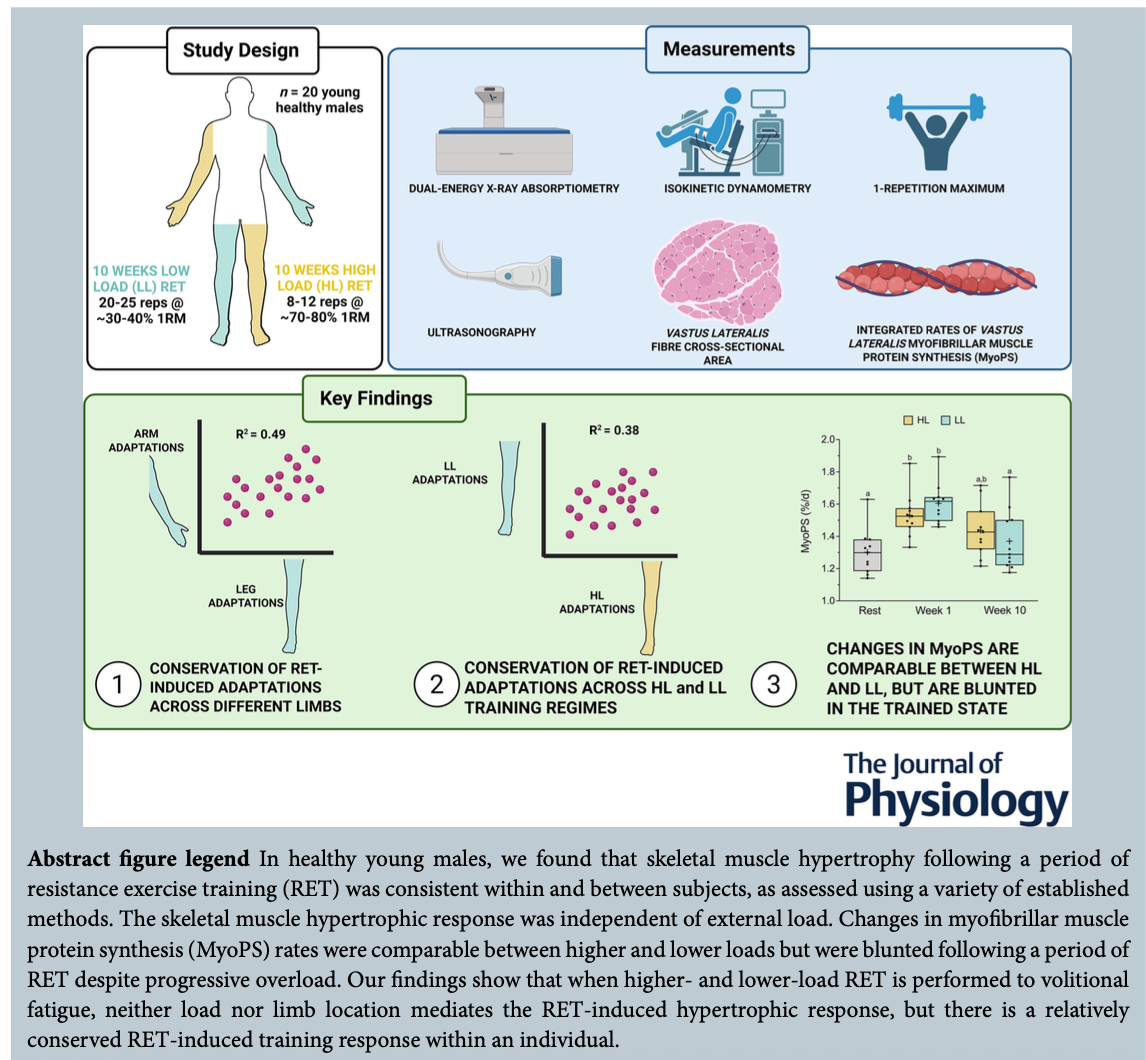
(Lees et al., 2025)
They completed three supervised resistance training sessions each week for 10 weeks. None of the participants missed any of the prescribed workouts. Each workout consisted of 3 sets of each exercise. Loads for each set were adjusted to ensure that muscular fatigue was reached at the appropriate rep ranges. Going to fatigue is defined as the inability to complete another concentric muscle action through full range of motion with proper form. Each rep was counted with a 2 seconds lifting phase and 2 seconds lowering phase. All participants ate normally, yet added two 25g whey protein shakes per day to ensure adequate protein levels to induce hypertrophy (an increase in lean muscle mass) (Lees et al., 2025).
The amazing results reveal that every participant’s leg and arm built muscle mass the same regardless of lower-load or higher-load (Lees et al., 2025). Interestingly, the bigger factor of hypertrophy was dependent on each person. Every individual was different and some gained more muscle than others, which could be due to genetics, limb lengths, or other factors that need to be studied further (Lees et al., 2025).
Concerning increasing strength, in the study, with both load variations the participants strength levels also increased similarly, again more dependent on the individual than the load (Lees et al., 2025).
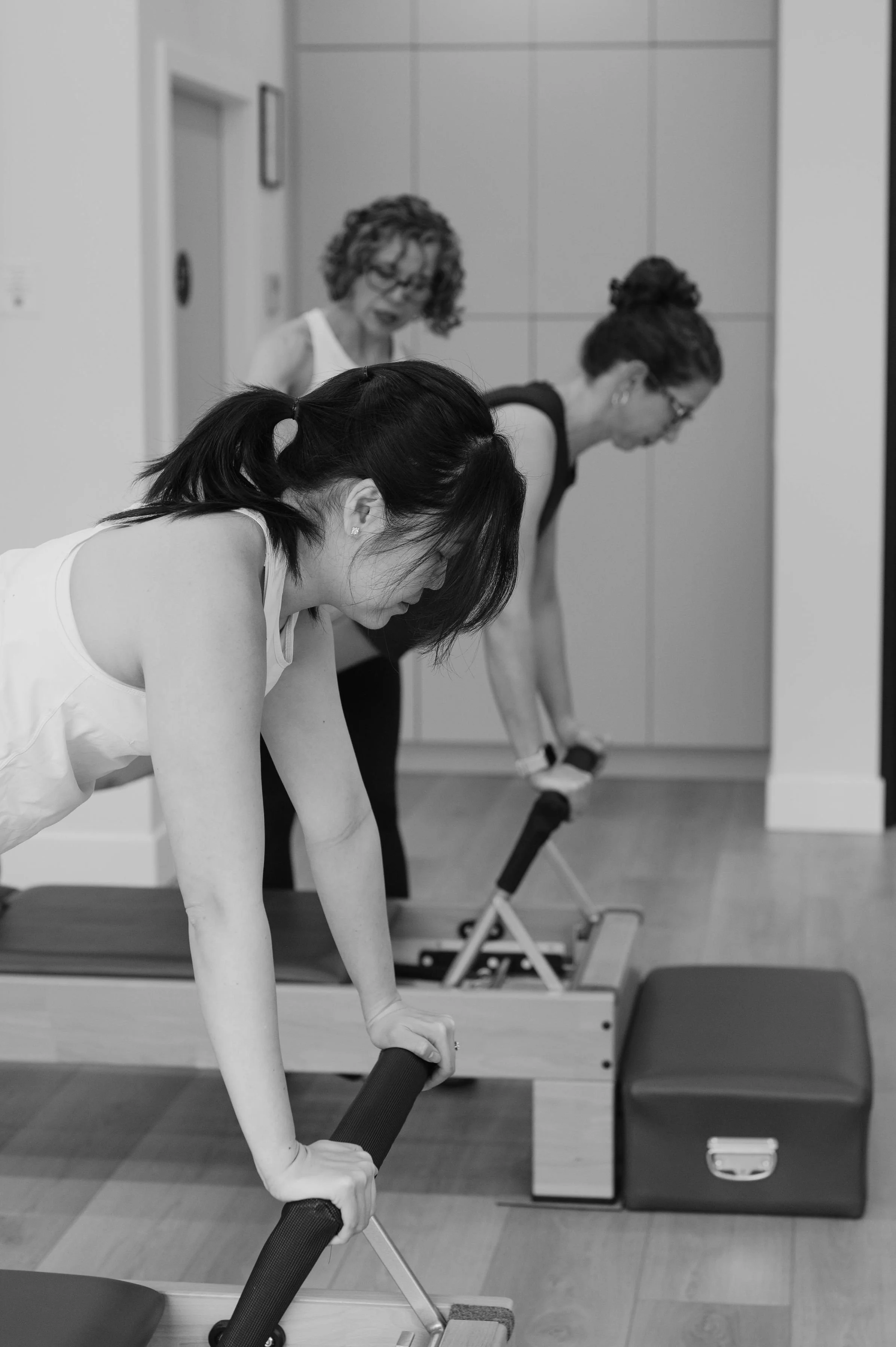
This study is another great example to do what you love. If you enjoy barbell lifts and CrossFit, then that is the best choice for you. If you love Pilates Apparatus, then stick with that. If you enjoy barre, then consistently do those workouts. If you love it all, do a bit of each! Consistency is the key to success.
Photo credit: Erin Girard
The American College of Sports Medicine recommends at minimum 2-3 resistance workouts per week and 150 minutes of cardiovascular activity for health and longevity (American College of Sports Medicine et al., 2021). It’s okay to miss the odd workout here and there, but getting your workouts in regularly is the best predictor of achieving results.
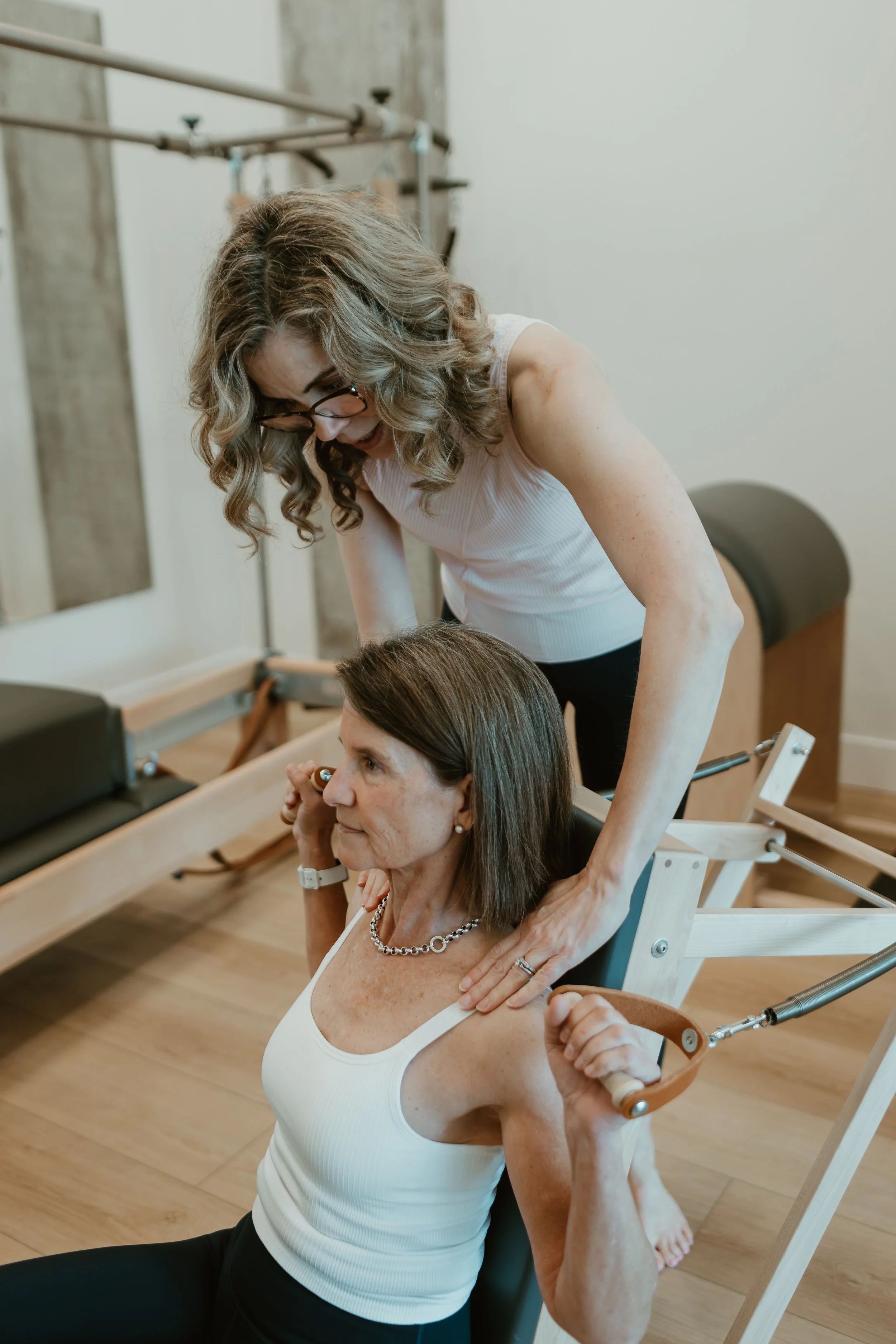
Because I am a Kinesiologist as well as a Pilates Instructor, I organize and structure the workouts we do here at Pilates Life Studio with the above factors in mind. We try to reach muscular fatigue within certain rep ranges, but always within each individual client’s range of motion and load capacity.
Photo credit: Meg Kristina Photography
Additionally, we try to repeat the 2 count lift protocol to limit using momentum. Finally, we add physiotherapy-style exercises to build in prehab and rehab protocols to keep our client’s bodies in the best working order possible.
Resources
American College of Sports Medicine, Liguori, G., Feito, Y., Fountaine, C., & Roy, B. (Eds.). (2021). ACSM’s guidelines for exercise testing and prescription (Eleventh edition). Wolters Kluwer.
Lees, M. J., Mcleod, J. C., Morton, R. W., Currier, B. S., Fliss, M. D., McKellar, S. R., Sidhu, R. S., Stansfield, B. N., Webb, E. K., McGlory, C., Burniston, J. G., & Phillips, S. M. (2025). Resistance training load does not determine resistance training‐induced hypertrophy across upper and lower limbs in healthy young males. The Journal of Physiology, JP289684. https://doi.org/10.1113/JP289684