
Nutrition for Body Composition Changes
Nutrition choices are incredibly personal. We have varied tastes and preferences, and different social practices around food. Furthermore, the misconceptions perpetuated by social media can leave us uncertain on how to eat healthy for our goals.
Most people want two things: to gain lean muscle and to lose fat. Often people exercise to lose fat and eat protein to gain muscle. But thinking this way is backwards.
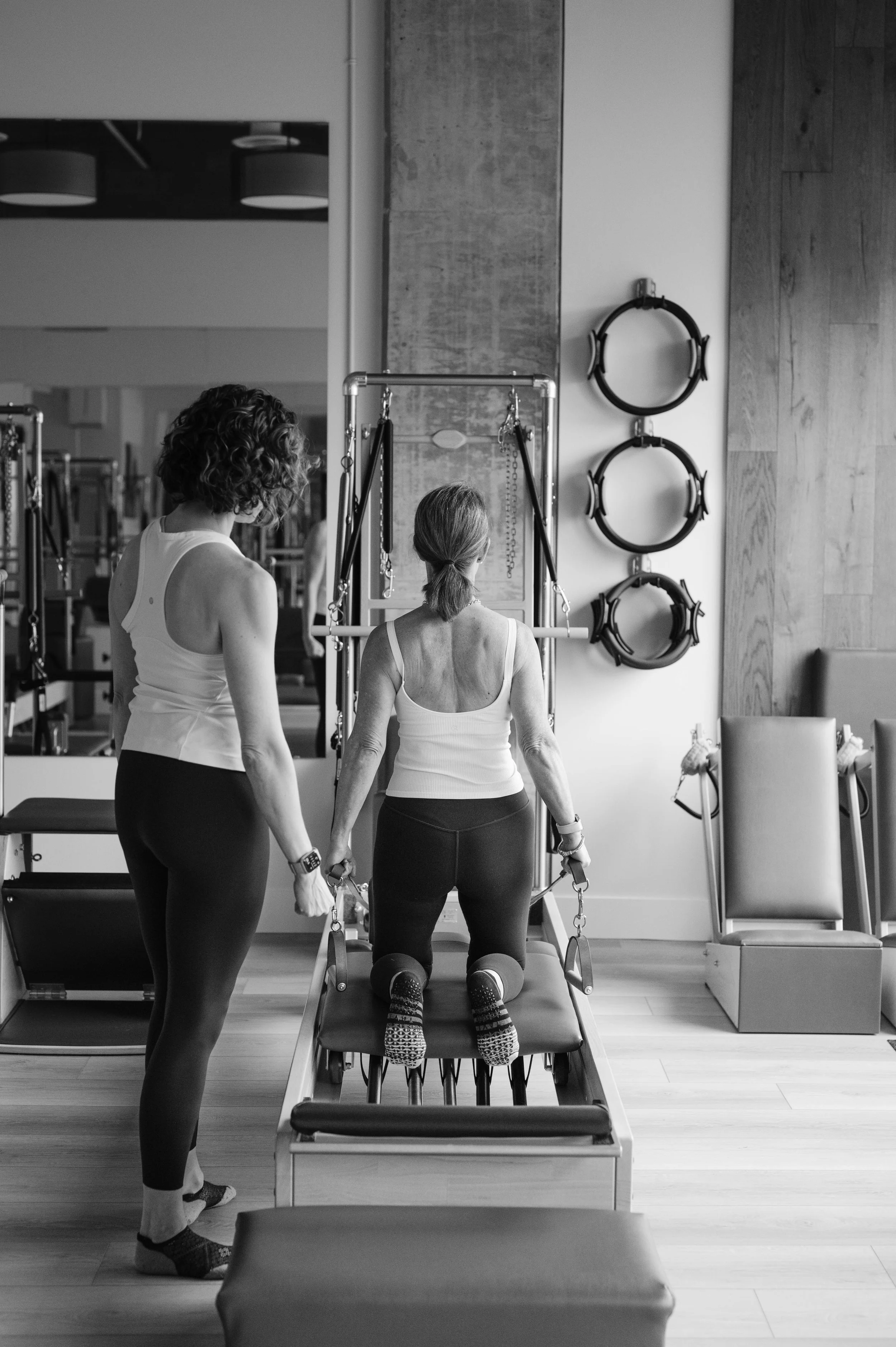
Exercise brings strength, endurance, and vitality (by gaining lean muscle) and strategic nutrition choices lose fat (or what we call favourable body composition).
Fat loss is primarily dependent on nutrition. Exercise can help, but nutrition is the main driver.
Photo Credit: Erin Girard
While it’s exercise that builds muscle, we do need a certain amount of calories and protein to feed that muscle to grow.
According to scientific literature, to lose fat we need to be in a slight calorie deficit. I am not a fan of dieting, so I often suggest only cutting back calories by 250-300 calories per day. If we cut back too much our metabolism slows and it’s just not fun or sustainable (who wants to feel hungry all the time?). And actually I recommend we first find out our unique daily calorie total and simply track food for awhile, before even cutting back on calories.
I love this BMR calculator to discover our daily calorie intake:
The Basal Metabolic Rate (BMR) Calculatorestimates your basal metabolic rate, which is the amount of energy expended while at rest. In the link it provides an activity level chart to figure out your daily calorie amount as per your typical activity. I find it’s quite accurate.
I am 51, 5’7”, and 128lbs. I am able to eat 2200-2300 calories a day to maintain my current weight. The activity chart says I can eat 2334 calories per day for my current activity level.
Once you have determined your daily calorie total, it’s time to figure out how much protein to eat to feed our muscles to grow after we have exercised to increase our strength. The recommended amount is 0.8-1 gram of protein per pound of bodyweight.
For me, I aim for 102-128g of protein daily. That normally consists of 1 tbsp of hemp hearts on my oatmeal and a protein bar in the morning, and 5oz of meat at lunch and dinner.

From numerous studies, tracking food intake has been proven time and again to be the most successful way to maintain or change body composition. I recommend the app My Fitness Pal, as I have used it for many years, but I know there are other apps out there as well.
I know tracking can be tedious, another great option is using Precision Nutrition’s handy serving chart:
For every meal:
1 palm of protein is about 3oz (aim for 1-2 palms)
2 fists of veggies is around 2 cups
1 cupped hand of carbs is 1/2 cup
1 thumb is 1-2 tbsp of fat

Nutrition is complex and I have kept this article’s advice simple. While calories and your protein intake, along with exercising consistently, are not the only factors to consider when trying to change your body composition, they are a great starting point. Try tracking for 3-6 months to see if this method works well for you. Tracking food and exercising need to be consistent and regular to be effective for your goals. If you feel you need more, a registered dietitian that specializes in your specific body composition goals is the perfect next step. I know of a few great ones I can refer.