
Shoulder Repositioning Effects Pain & Strength
I hope you had an amazing Christmas and New Years. I had the last 2 weeks of December off from teaching and university studies. Often between university courses I relish more time to delve into topics of interest. I had the opportunity to revisit one of my favourite courses titled Core Exercise Solutions (CES) Pelvis Pro. I have also done their Pregnancy and Postpartum Exercise Specialist course and their Shoulder Solutions course. These amazing courses were created by two very passionate physical therapists from the States who want to educate other physios, trainers, kinesiologists, and Pilates instructors on the healthy functioning of the pelvis and shoulder girdles.
During the Shoulder Solutions course, I came across a very interesting study that I believe is very significant to the main purpose of Pilates.
First and foremost, Pilates is a great workout. I love the feeling of my muscles and joints after a flowing Pilates session. My muscles feel worked, I feel more flexible, I get a little sweaty, but I don’t feel drained.
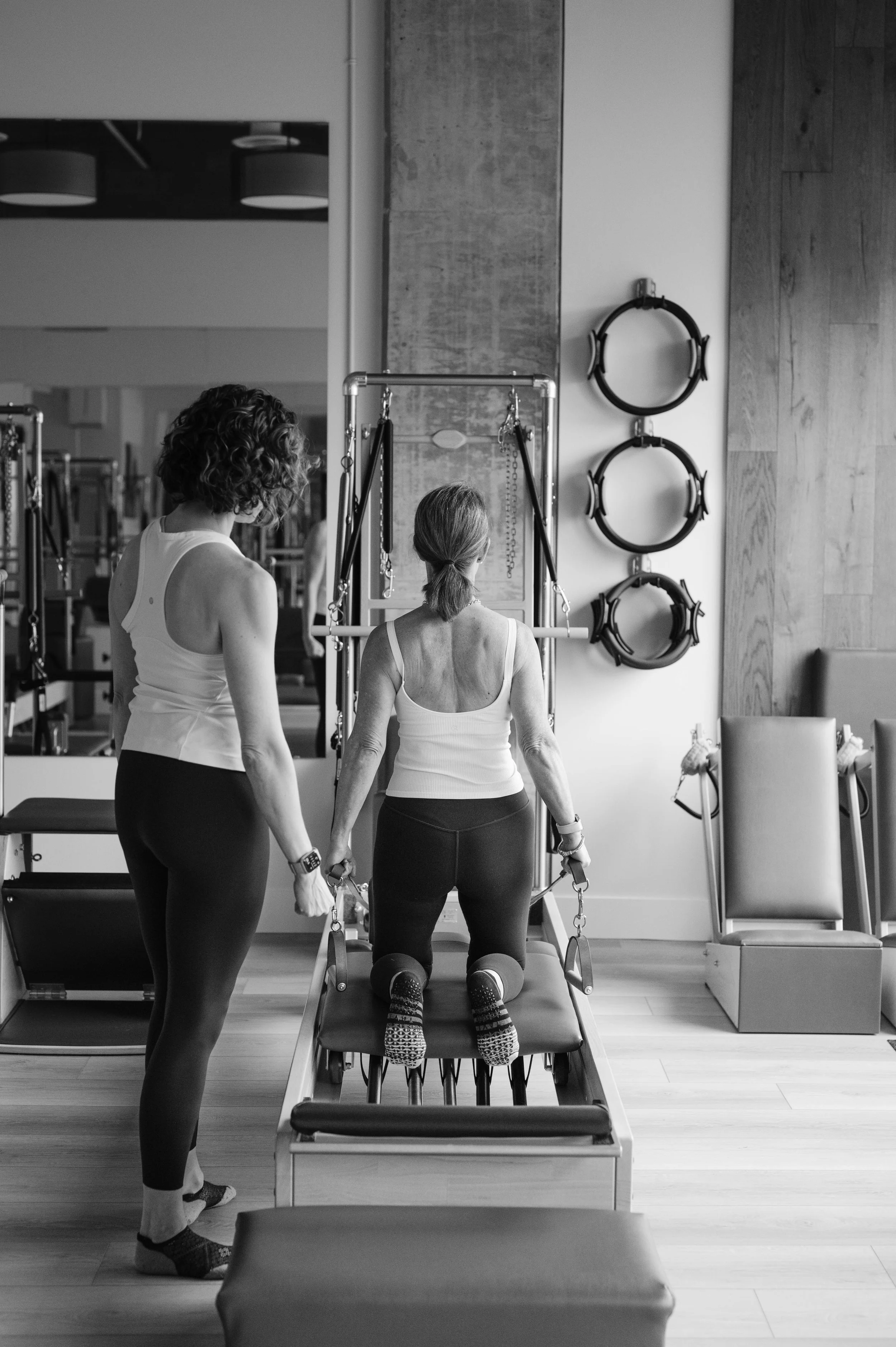
The other element I love about Pilates is the corrective aspect. Pilates isn’t just focusing on your global movers (your large muscle groups) but your local and global stabilizers (the smaller muscles that support your joints).
Photo credit: Erin Girard
One of the main focuses here at PLS is the optimal movement of our clients bodies, especially around each joint. Due to imbalances from the way we move (or hold positions) during our daily lives, as well as, from our previous and present injuries our joints and movement patterns become misaligned.
Most people don’t think about these dysfunctional movement patterns until the misalignments began to appear as painful symptoms. It’s important to know no one moves perfectly all the time, it’s impossible! A goal for our clients is to help realign and rebalance the body to help reduce pain and discomfort and increase strength around each joint.
And while some of the exercises in Pilates do use large muscle groups which are more systemically fatiguing (heart rate rises, muscles burning), all of the Pilates exercises are meant to be controlled to focus on correcting movement patterns and using our smaller local and global stabilizers.
Here is a great example on why this is important:
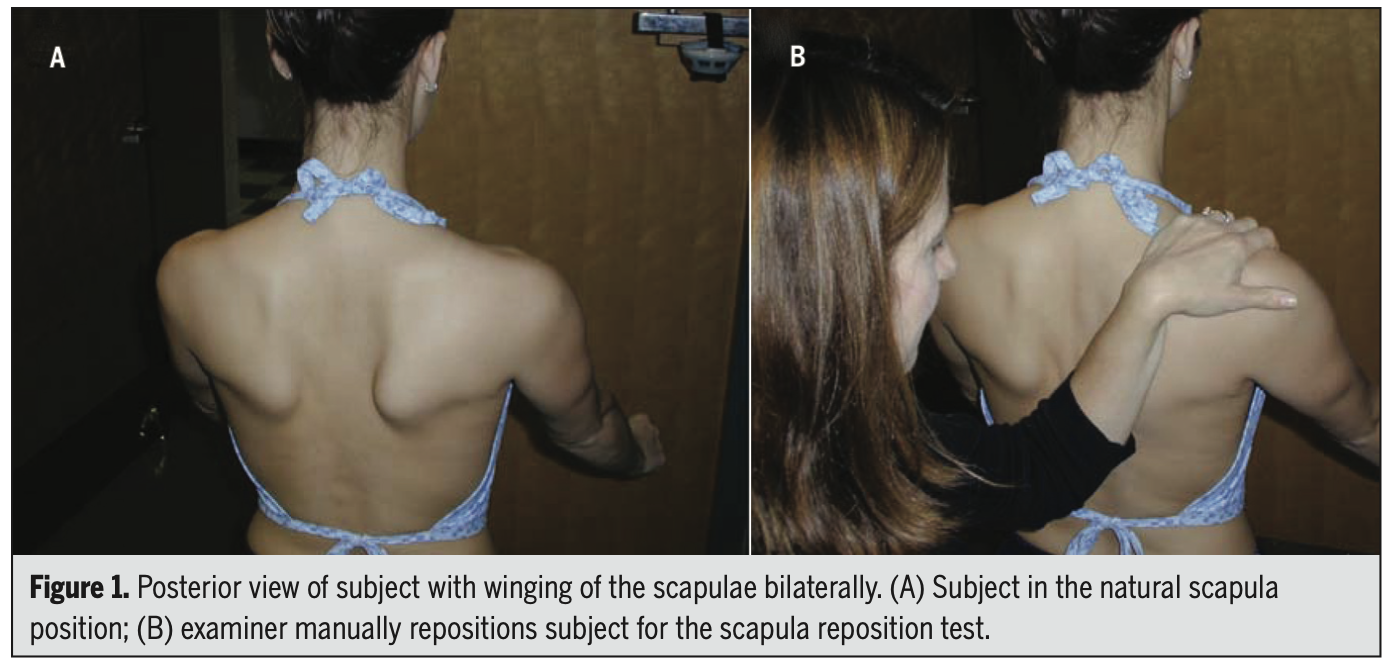
In 2008, a sample of 142 college athletes were studied for pain during several shoulder impingement exams. There were 111 males and 31 females. For the first part of the exams the athlete’s shoulder girdle was tested in its resting posture, which was noted as being in an anterior tilt with rounded shoulders (sample picture on the left). 69% of the subjects tested positive for shoulder impingement and 44% noted being in pain.
\
The same exam was then repeated when the shoulder girdle was manually placed into the correct position for proper shoulder mechanics: a posterior tilted shoulder girdle with the shoulder blades slightly retracted back and down (picture on the right, which is what we try to achieve performing our many shoulder exercises in Pilates). In the study, having the shoulder in the correct position resulted in having the painful symptoms lessen in 47% of the subjects, with 26% of the subjects increasing their strength significantly.
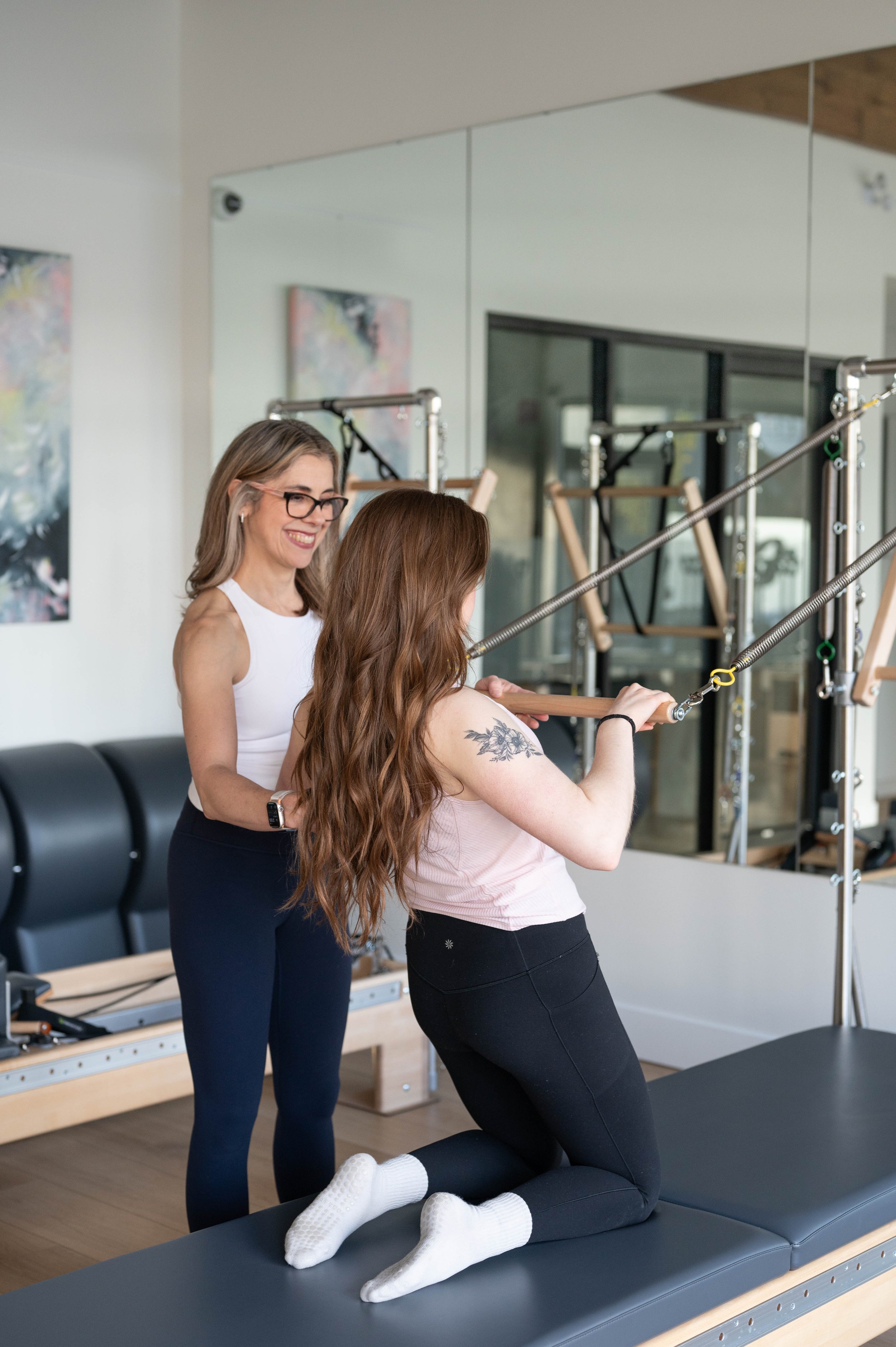
So pain was less and strength significantly increased when the shoulder girdle is in the correct position. Amazing! Demonstrating that our joints function better when moving in their functional movement patterns.
Photo credit: Erin Girard
In our sessions here at Pilates Life Studio, we focus on strengthening the shoulder girdle in a way that helps your muscles strengthen and lengthen to reposition into the proper placement.
Resources:
Research Report Titled “Effect of the Scapula Reposition Test on Shoulder Impingement Symptoms and Elevation Strength in Overhead Athletes” from Journal of Orthopaedic & Sports Physical Therapy, January 2008, Volume 38, Number 1